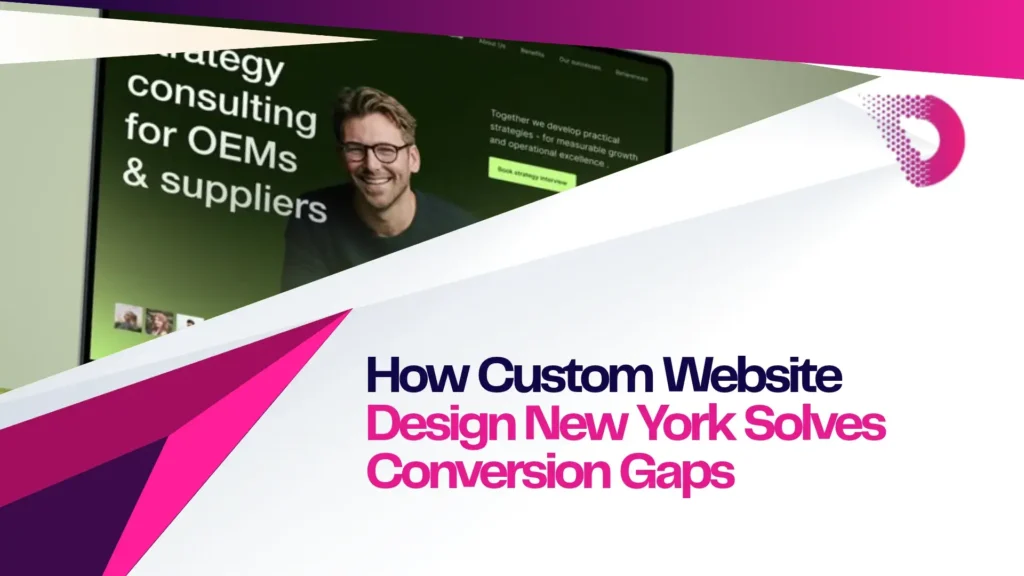
What Causes Website Conversion Gaps?
Conversion gaps occur when visitors reach a website but leave without completing an intended action. This might include submitting a contact form, requesting a quote, scheduling a consultation, or purchasing a product. Several common problems contribute to poor conversion rates:
- Unclear messaging: Visitors cannot quickly understand what a business offers or whom it serves.
- Weak calls to action: Buttons fail to explain what visitors should do next.
- Limited trust signals: Missing testimonials, credentials, and transparent business information create uncertainty.
- Poor mobile usability: Crowded layouts, small buttons, and difficult forms frustrate smartphone users.
Businesses should identify these barriers before investing in a complete redesign. Fixing specific problems can be more effective than changing a website’s appearance without understanding its performance.
How Strategic Website Design Improves Conversions
1. Create Clear Page Layouts
Visitors should understand a page’s purpose within seconds. A strong layout presents the main value proposition first, followed by supporting benefits, relevant services, and a clear next action. A web design company New York businesses choose should prioritize this information hierarchy to help visitors find what they need quickly.
For example, a service business could position its primary offering and quote request button near the top of its homepage. Additional sections could explain the process, answer common questions, and showcase genuine customer feedback.
A logical information hierarchy helps visitors make decisions without searching through unnecessary content. Each page should have a defined purpose and guide users toward an appropriate next step.
2. Simplify Navigation
A confusing menu can prevent potential customers from discovering relevant services. Businesses should organize navigation around visitors’ needs, including service descriptions, company information, and contact options.
A well-organized website helps visitors navigate pages and locate relevant information without unnecessary effort. Menus should reflect customer priorities and make essential details easy to access.
Reviewing common customer questions can reveal navigation gaps, especially when visitors struggle to find service descriptions, pricing details, or booking options.
3. Improve Mobile Usability and Page Speed
Many potential customers browse websites using smartphones. If pages load slowly, text becomes difficult to read, or buttons are hard to tap, visitors may leave before completing an action.
Businesses can address these issues by compressing images, removing unnecessary scripts, using responsive layouts, and testing important pages across different screen sizes.
Mobile forms also deserve attention. Request only essential information, label fields clearly, and make submission buttons easy to identify. Tools such as Google PageSpeed Insights can help identify performance issues and opportunities for improvement.
4. Strengthen Calls to Action and Trust Signals
Every important page should provide a logical next step. Depending on the business, visitors might request an estimate, book a consultation, call the company, or submit an enquiry.
Specific button text communicates a clearer outcome. For example, “Request a Project Estimate” explains the action better than a generic “Click Here” button.
Professional website design New York businesses invest in should incorporate trust signals that reduce uncertainty. Genuine testimonials, relevant project examples, accurate contact information, and transparent service descriptions help visitors evaluate a business before reaching out. Avoid unsupported claims or fabricated reviews. Authentic evidence builds credibility and gives potential customers a stronger reason to make contact.
How to Measure and Fix Conversion Problems
Website changes are more effective when guided by performance data rather than guesswork. Before making adjustments, review existing analytics to understand visitor behavior and identify where potential customers abandon the process. Monitor key performance indicators to evaluate whether your improvements deliver meaningful results.
Track these important metrics:
- Conversion rate: The percentage of visitors who complete a desired action.
- Form completion rate: The proportion of visitors who successfully submit an enquiry.
- Landing page engagement: Which pages encourage visitors to explore further.
- Mobile performance: Whether smartphone users experience more obstacles than desktop visitors.
- Lead quality: Whether enquiries come from customers who match the business’s target audience.
Analytics tools can reveal patterns, while usability testing and visitor feedback can help explain why problems occur. Respect user privacy and follow applicable consent requirements when collecting behavioral data.
Test one meaningful change at a time whenever practical. For example, simplify a lengthy enquiry form or compare different calls to action. Allow enough time and traffic to interpret results responsibly instead of treating every short-term fluctuation as proof of success.
How Digi Era Pro LLC Helps Businesses Improve Website Performance
Digi Era Pro LLC provides web development and digital marketing services to help businesses strengthen their online presence. The team can help evaluate website structure, responsive layouts, usability, and conversion-focused elements according to business goals. A thoughtful approach connects design decisions with customer needs and measurable outcomes instead of focusing exclusively on appearance.
Ready to improve your website? Contact Digi Era Pro LLC to discuss your project and explore solutions tailored to your business objectives.
Frequently Asked Questions