
Discover how Meta Ads in Newburgh, NY can help small...
Read More

What is the First Rule of Web Design?
Why Web Design Rules Matter:
When someone visits a website for the first time, opinions are formed faster than most people realize. Within just a few seconds, visitors decide whether to stay, scroll, click, or leave. This is exactly why understanding the first rule of web design is so important. Numerous websites fail not because they lack features, but because they ignore how real users perceive and interact with the site.
Poor layout, confusing navigation, slow-loading pages, or unclear content consistently frustrate visitors. As a result, they abandon the site without taking any action. This creates missed opportunities, lower trust, and reduced conversions. The result isn’t a complicated design or flashy visuals: it starts with one simple principle: designing for the user first.
In this section, we will easily explain what web design is, what the first rule of web design means, and why user experience and usability form the foundation of effective website design. These fundamentals apply to every website, regardless of assiduity or size.
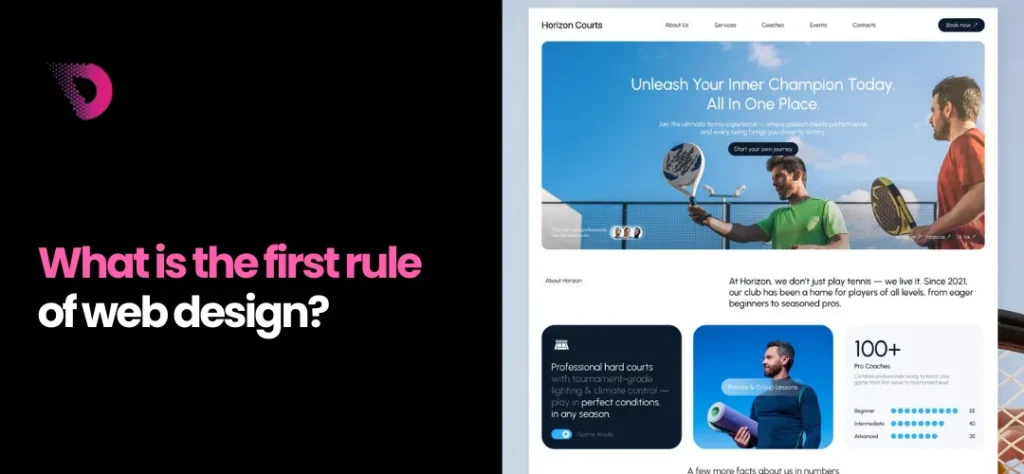
What Is Web Design?
Web design refers to the process of planning, structuring, and arranging content on a website so users can fluently access information and complete tasks. It includes layout, colors, typography, navigation, distance, and overall structure. Web design isn’t the same as web development. While development focuses on rendering and functionality, design focuses on how users interact with the product.
Good web design ensures that visitors can understand a website quickly and without confusion. Pages should feel familiar, predictable, and easy to navigate. This is where website design principles play a critical role. Design choices influence how users move through a site, how long they stay, and whether they trust the brand behind it.
Effective web design combines visual clarity with strong usability. A visually charming point that’s delicate to use will fail just as snappily as a simple point with poor structure. This balance is what separates average websites from user-friendly web design that performs well.
What Is the First Rule of Web Design?
The first rule of web design is simple but pivotal: always design for the client. Everything on a website should be created to help callers find information snappily, understand it fluently, and take action without confusion. This rule is frequently called the most important rule of web design because it influences every other design decision.
When contrivers ignore users and concentrate only on illustrations, trends, or particular preferences, websites can become cluttered and confusing. In discrepancy, when the user experience attendants make design choices, websites feel intuitive and natural. Digi Era Pro LLC principle applies to layout, navigation, content structure, and indeed, color choices.
For beginners, this rule acts as a foundation for all web design rules. Before adding robustness, complex layouts, or creative rudiments, introducers must first ask one question: Does this help the user? If the answer is no, it does not belong on the runner.
Why User Experience Comes First in Web Design?
The client’s experience in web design focuses on how people feel when using a website. It includes ease of use, clarity, speed, and overall satisfaction. A positive user experience reduces frustration and builds trust, while a negative one drives users down.
Websites with strong client experience, companion callers naturally flow from one section to another. Important information is easy to find. Buttons are clear. Text is readable. Pages cargo snappily. These rudiments work together to produce an intuitive website design that users appreciate.
Hunt machines also value user experience. Websites that keep druggies engaged, reduce bounce rates, and encourage commerce frequently perform better in search results. This is why web design stylish practices now concentrate heavily on usability, availability, and content clarity rather than visual appeal alone.
5. Usability in Web Design Explained:
Usability in web design refers to how fluently users can interact with a website. It answers questions similar to Can the user find what they need? Can they complete tasks without confusion? Does the point work easily on different biases?
Website usability includes several key factors:
- Clear and Consistent Navigation: Menus and links should be easy to find and uniform across all pages, helping users move through the website effortlessly.
- Logical Page Structure: Organize pages with headings, subheadings, and grouped content so visitors can quickly understand the flow of information.
- Readable Text and Proper Spacing: Use legible fonts, adequate line spacing, and contrast to improve readability and reduce eye strain.
- Fast Loading Times: Optimize images, scripts, and code to ensure pages load quickly, keeping users engaged and reducing bounce rates.
- Mobile-Friendly Layouts: Design responsive layouts that adjust seamlessly across devices, ensuring a smooth experience on smartphones and tablets.
When usability is ignored, indeed, well-designed websites fail. The client doesn’t want to learn how a website works. Digi Era Pro LLC anticipates it to work naturally. This is why usability is considered a core part of the fundamentals of web design.
By focusing on usability and user-first thinking, creators produce websites that feel royal to use. This approach not only improves engagement but also increases transformations and long-term client trust.
Core Web Design Principles Every Website Should Follow:
Designing a website is more than just creating a seductive layout. Following web design principles ensures the point is functional, intuitive, and user-friendly. The core principles include:
- Visual Hierarchy: Organize content so users can naturally understand what is important first. Use headings, subheadings, colors, and size to guide attention.
- Consistency: Maintain uniformity across pages. Consistent fonts, colors, button styles, and navigation improve recognition and usability.
- Readability: Text should be clear and easy to read. Proper spacing, font size, and contrast contribute to a positive user experience.
- Accessibility: Websites must be accessible to all users, including those with disabilities. Add alt text for images, captions for videos, and proper ARIA labels.
- Responsiveness: Digi Era Pro LLC ensures your website adapts smoothly to mobile devices, tablets, and desktops. Mobile-first design is now a standard requirement.
- Load Speed: Fast-loading websites reduce bounce rates and improve user satisfaction. Optimize images, compress files, and reduce unnecessary scripts.
Usability vs Visual Design: Finding the Balance:
While visuals are important, usability should always take precedence. Users value sites that are intuitive and functional over ones that are flashy but confusing. Striking the right balance ensures:
- Users can find what they need without confusion.
- Pages are appealing without compromising function.
- Calls to action are clear and strategically placed.
Design Element | Best Practice | Purpose |
Navigation | Use clear, descriptive menu items and a consistent structure | Helps users move around easily |
Buttons & Links | Distinguishable buttons with actionable text | Guides users to take desired actions |
Content Layout | Use headings, bullets, and spacing | Improves readability and comprehension |
Images & Media | Optimize for speed, use descriptive alt text | Enhances engagement without slowing load times |
Color & Typography | High contrast, readable fonts | Ensures accessibility and visual clarity |
Forms | Simplify fields, clear labels | Reduces friction for user input |
How Web Design Affects User Behavior:
Web design directly impacts user behavior and decision-making. Digi Era Pro LLC well-structured website leads to:
- Longer time spent on site.
- Lower bounce rates.
- Higher engagement and conversions.
- Increased trust and credibility.
For example, placing important content “ above the pack ” helps clients see crucial information immediately. Also, intuitive navigation allows druggies to find answers quickly, reducing frustration. Poor design, still, can lead to confusion, crimes, and loss of leads.
Common Web Design Mistakes Beginners Make:
Beginners often make the following mistakes, which violate the first rule of web design:
- Overloading pages with too much information or visuals.
- Using inconsistent navigation or color schemes.
- Neglecting mobile users.
- Ignoring accessibility and readability.
- Failing to guide users toward desired actions.
Recognizing these pitfalls early allows designers to correct them and adhere to web design best practices.
Practical Tips to Improve Website Usability:
Here are actionable tips to ensure your website aligns with the first rule of web design:
- Prioritize content: Highlight the most important information first.
- Simplify navigation: Use clear menus, consistent buttons, and logical structure.
- Optimize page speed: Compress images, minimize scripts, and enable caching.
- Test responsiveness: Check how your site performs on multiple devices.
- Focus on accessibility: Include alt text, captions, and readable fonts.
- Use white space effectively: Prevent clutter and improve readability.
- Guide users: Use CTAs strategically and avoid confusing links.
- Gather feedback: Conduct user testing to identify pain points.
Additional Insights and Advanced Tips:
- Focus on User Goals: Understand what users want to accomplish on your website and prioritize those actions.
- Behavior Tracking: Digi Era Pro LLC uses analytics tools to observe how users interact with your website, which pages they visit most, and where they drop off.
- Microinteractions: Small animations or feedback (like hover effects) can guide users subtly without overwhelming them.
- Simplify Forms: Minimize the number of required fields to improve conversions.
- Visual Consistency: Align images, buttons, and typography to reinforce brand identity and enhance trust.
- Continuous Iteration: Regularly update content, fix broken links, and improve site speed to maintain optimal user experience.
Digi Era Pro LLC implementing these tips along with the first rule of web design, designers can create websites that are intuitive, effective, and enjoyable for users.
Putting the First Rule into Practice:
The first rule of web design isn’t a suggestion: it’s a necessity. Prioritizing user experience, usability, and availability ensures your website is functional, engaging, and effective. Digi Era Pro LLC principles, avoiding freshman miscalculations, and enforcing practical tips, contrivers can produce websites that users love and trust.
Flashback, a website that’s easy to navigate, visually clear, and responsive, will always outperform one that’s flashy but confusing. Enforcing the first rule creates a strong foundation for all unborn design choices.
Call to Action:
Estimate your website moment and ensure it follows the first rule of web design. Prioritize your clients, simplify navigation, and test usability across bias. By applying these web design principles, you can ameliorate engagement, increase conversions, and build lasting trust with your followership.
Frequently Asked Questions:
Good web design combines usability, readability, responsiveness, and aesthetics, ensuring users can easily find information and complete tasks.
UX ensures visitors can navigate your website smoothly, which reduces frustration, increases trust, and drives conversions.
The first rule is designing for the user first. Every design choice should prioritize clarity, ease of use, and accessibility.
Focus on intuitive navigation, readable content, responsive layout, clear CTAs, and accessible elements to meet user needs.
Website usability refers to how easy and efficient it is for users to navigate, find information, and complete tasks on a site.
Key elements include intuitive navigation, readable content, responsive design, fast loading times, accessible features, and clear calls-to-action.
Beginners should focus on user-first design, consistent layout, readable typography, mobile optimization, and simple navigation. Regularly testing the site helps refine these rules.
Recent Posts

Facebook Advertising Companies: What Services Should You Expect?
Find the right Advertising Agency Newburgh, NY to improve your...
Read More
How to Choose the Best Advertising Agency in Newburgh, NY
Find the right Advertising Agency Newburgh, NY to improve your...
Read More
SEO Companies Near Me: Questions to Ask Before Hiring
Looking for SEO Companies Near Me Newburgh, NY? Learn the...
Read MoreLet’s Build Something Powerful for Your Business
Let’s Make Your Brand Stand Out!

EXPLORE
CONTACT
General Inquiries
(786) 600-1595
Sales Department
(832) 521-7343
Email Us
info@digierapro.com

©2021. All rights reserved by Digi Era Pro LLC
Terms & Conditions